RESERVE YOUR APPOINTMENT
111 E Jackson Ave, Suite 102 · Knoxville
Monday through Friday, 10 AM to 5 PM, by appointment only. After-hours appointments available upon request.
Home / Treatments / Botox & Neuromodulators
Smoother skin, still your face. Often called Botox, the treatment is a neuromodulator, and there’s more than one.
RESERVE YOUR APPOINTMENTBotox and neuromodulators
“Botox” has become the catch all name for wrinkle relaxing injections, but it’s actually just one brand among several. The category is called a neuromodulator: an injectable treatment that temporarily reduces the nerve signals that tell specific muscles to contract. When those muscles relax, the skin above them smooths out, because repeated movement is one of the primary contributors to these expression lines.
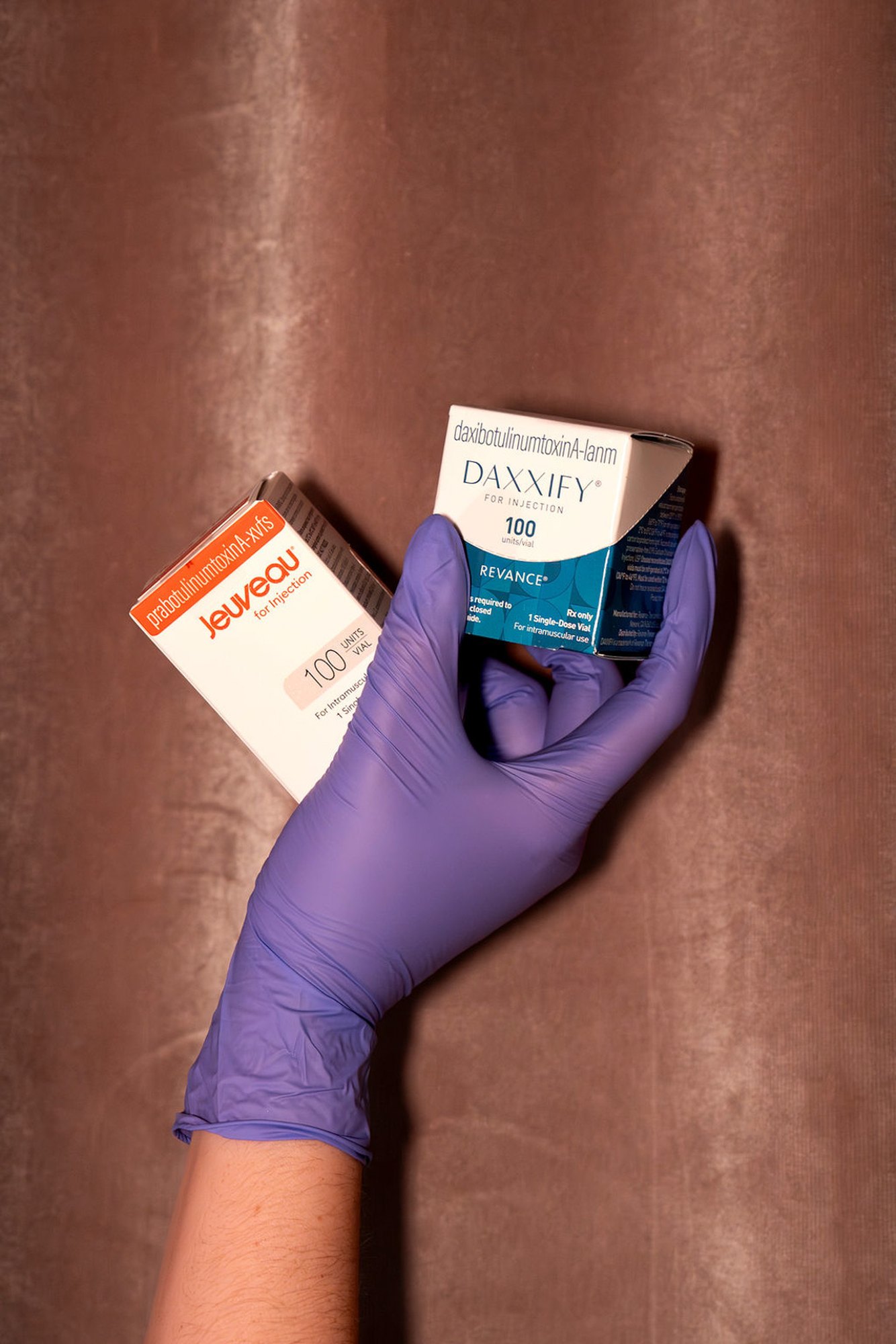
At Astra, neuromodulator treatments are performed by Molly Muecke, MSN, NP-C, a board-certified Nurse Practitioner and national aesthetic educator, using Daxxify and Jeuveau rather than the original Botox brand. Treatments are performed at Astra Aesthetics in Knoxville’s Old City and are customized to each patient’s facial anatomy, movement, and goals.
Daxxify is the newer of the two: it’s formulated with a proprietary peptide excipient and is designed with longer duration in mind. In clinical studies of frown lines, Daxxify demonstrated results lasting approximately six months for many patients, although individual duration varies.
Jeuveau, another botulinum toxin type A neuromodulator, offers an additional option based on a patient’s treatment history, goals, and individual response. Some patients begin noticing results within the first several days.
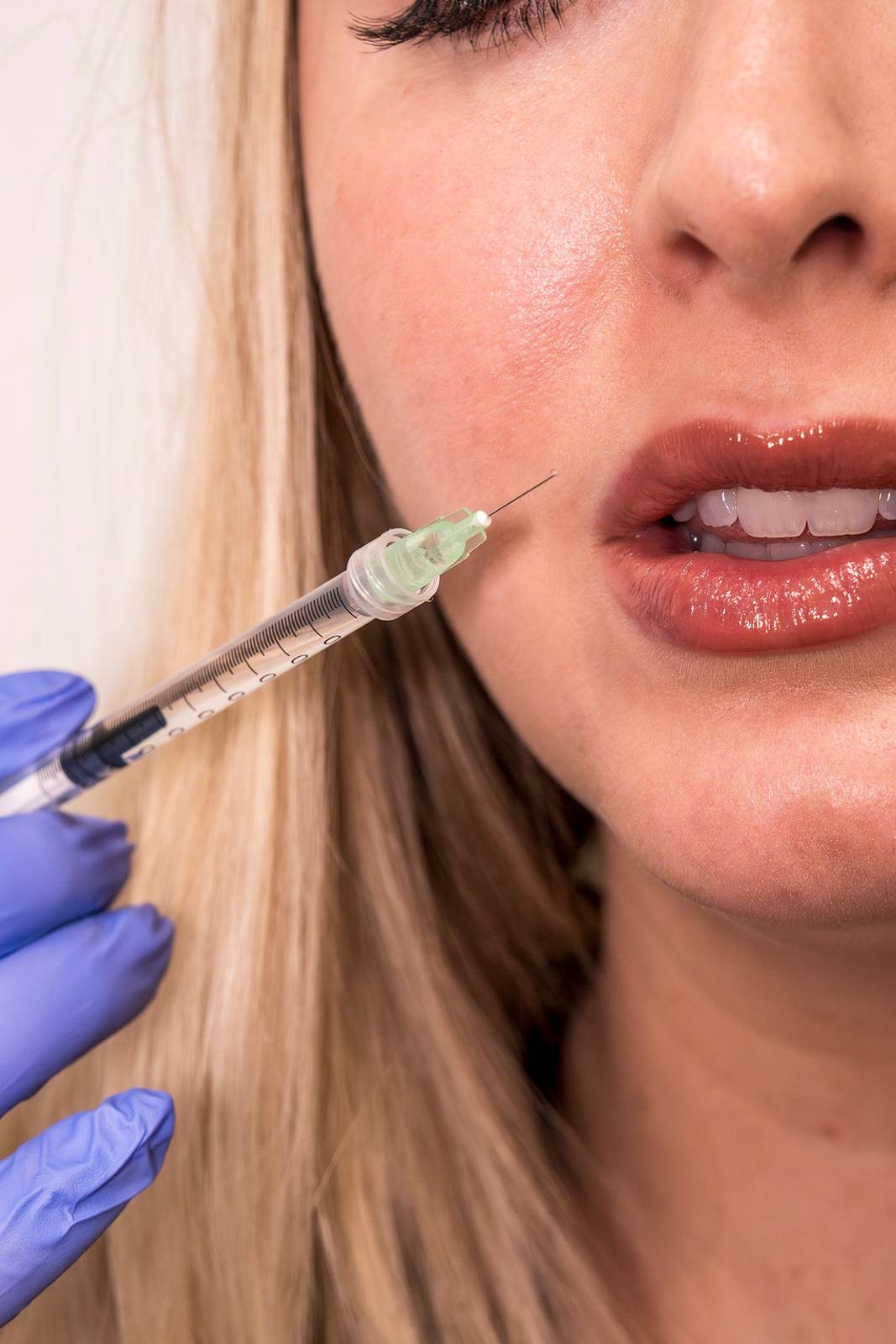
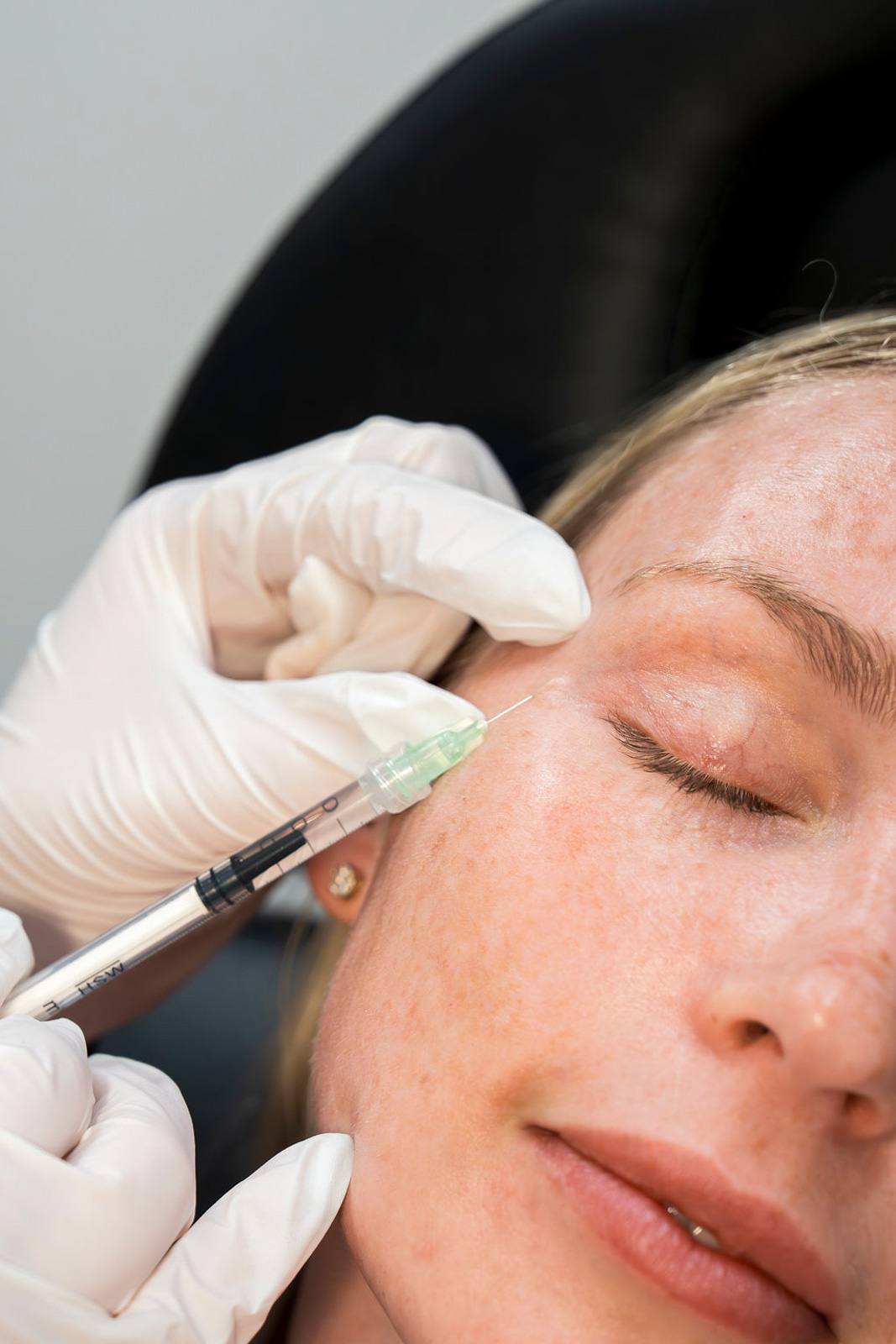
The most commonly treated areas include the vertical lines between the brows (the “elevens”), the horizontal lines across the forehead, and the fanning lines at the outer corners of the eyes (crow’s feet). These are called dynamic wrinkles because they develop from repeated facial movement and are often most noticeable during expression. Left untreated over years, the constant folding can etch those lines into the skin even at rest, which is why some patients choose preventative treatment before those lines become more deeply established.
The vertical lines between the brows.
The horizontal lines across the forehead.
The fanning lines at the outer corners of the eyes.
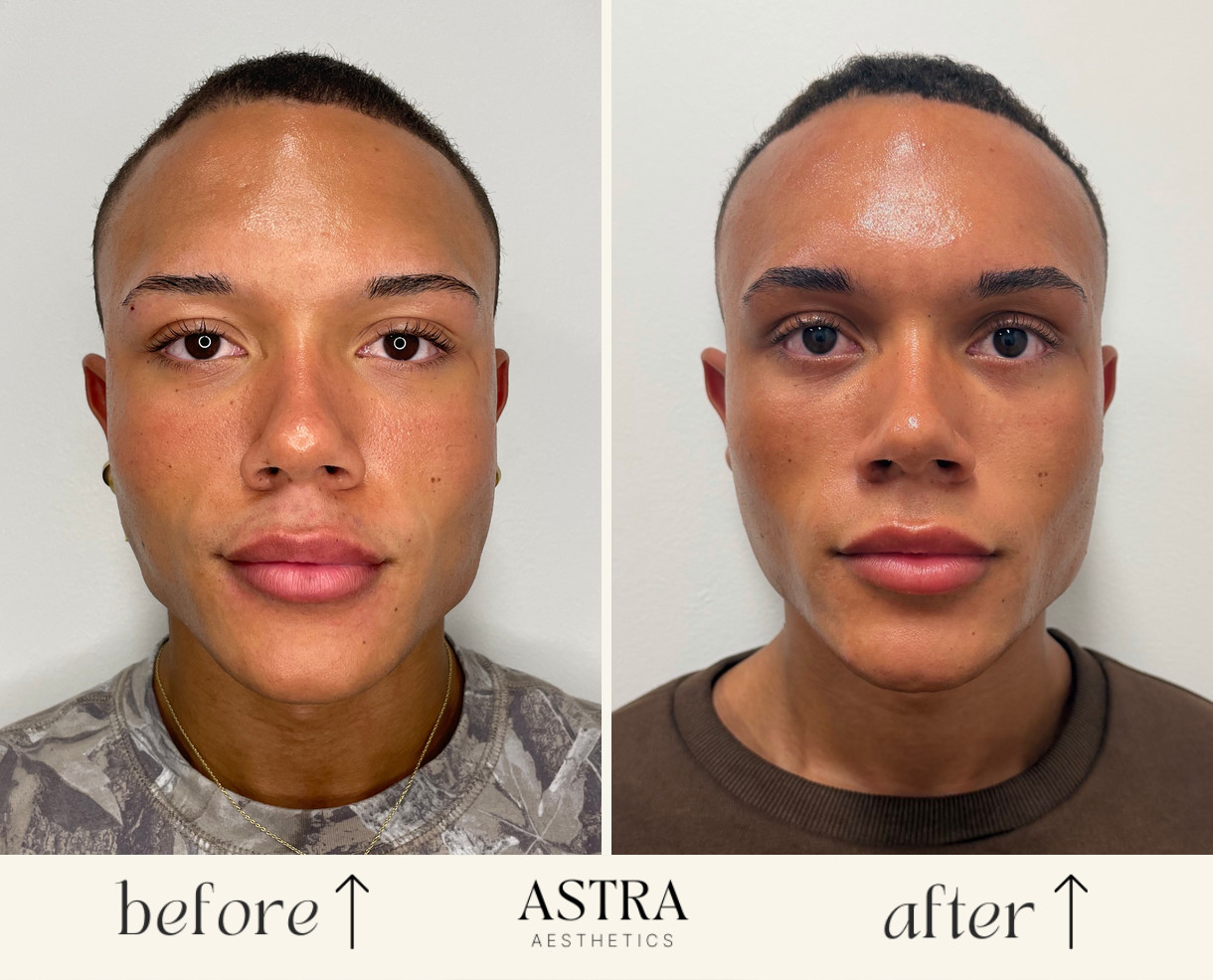
Results
Real patients, shared with their permission. Individual results vary.
Filler and neuromodulators
Dosing
Dosing isn’t one-size-fits-all. Muscle strength, the depth of existing lines, facial symmetry, and what the patient wants to preserve (some patients want to keep some expression in the forehead, others want it fully smooth) all factor into how many units go where. At Astra, Molly evaluates the face both at rest and in motion before determining placement and dosing. Rather than applying the same injection pattern to every patient, treatment is designed around the individual face and the amount of movement each patient wants to preserve. The goal is to soften what is distracting while maintaining balance, expression, and a result that still looks like you.
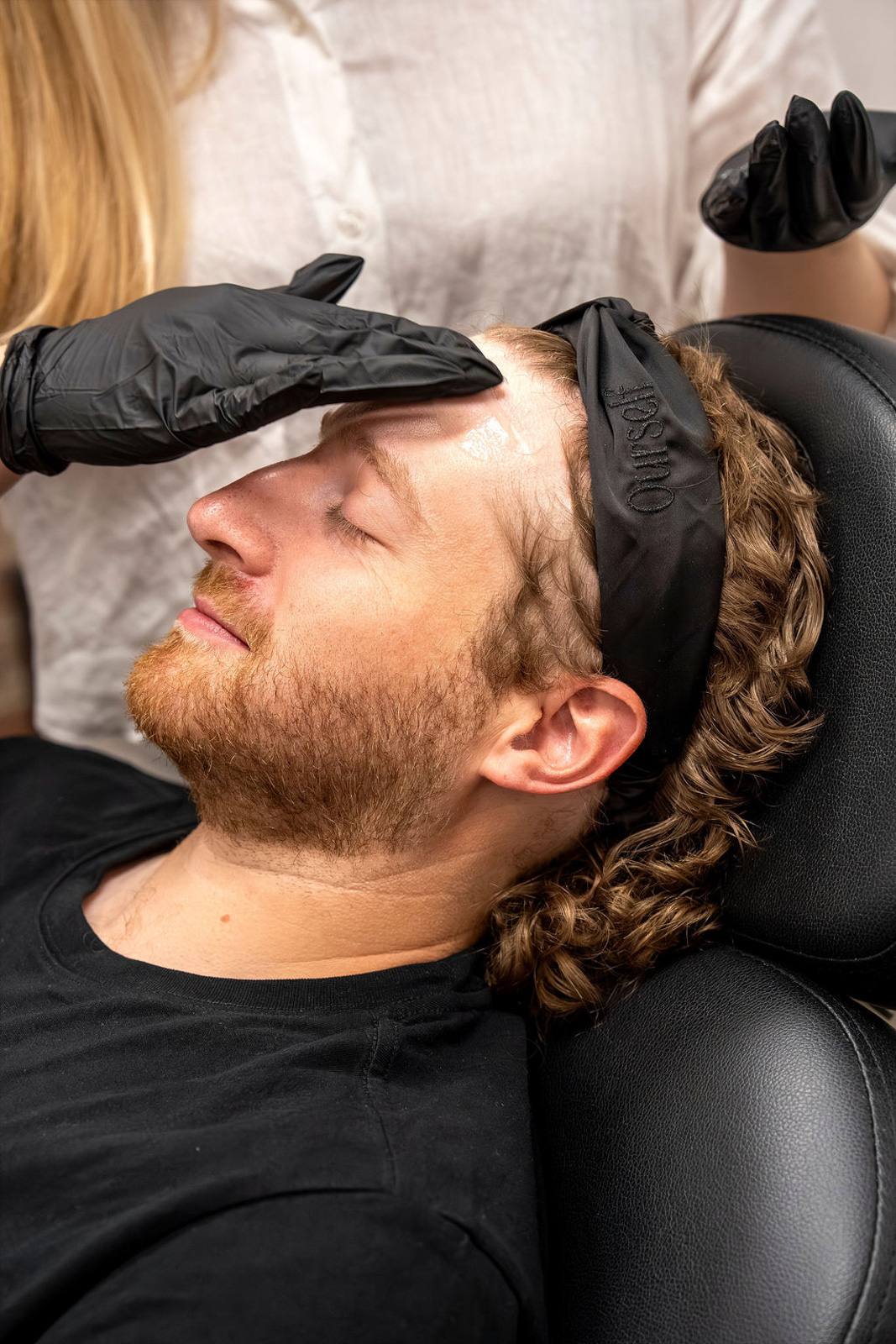
The appointment itself is quick, typically fifteen to thirty minutes. A series of small injections is placed at carefully selected treatment points based on the patient’s individual facial anatomy and movement using a very fine needle. Most patients describe the sensation as a brief pinch rather than significant pain, and treatment is generally well tolerated without topical numbing. There’s minimal downtime: patients typically return directly to work or errands afterward, though Molly reviews individualized aftercare instructions with each patient before they leave.
Results aren’t immediate. The neuromodulator needs time to take effect at the nerve-muscle junction, so patients may begin noticing softening within the first several days, with results continuing to settle over the following one to two weeks. This is why Astra recommends allowing adequate time for the treatment to fully settle before evaluating the final result or considering an adjustment.
Fifteen to thirty minutes of small injections with a very fine needle.
Minimal downtime. Molly reviews individualized aftercare instructions before you leave.
Softening may begin to show.
Results continue to settle.
Duration varies by product, dose, treatment area, and individual response. Molly recommends treatment intervals as part of your care.
What makes Astra's approach different
Neuromodulator treatment at Astra is anatomy-driven and highly individualized. I evaluate the face both at rest and in motion, taking into account muscle strength, symmetry, facial proportions, existing lines, and how much movement each patient wants to preserve. I don’t believe in applying the same injection pattern or dose to every face. My goal is to soften what bothers the patient while preserving balance, expression, and the characteristics that make them look like themselves. As a Nurse Practitioner and national aesthetic educator, I approach every treatment with the same emphasis on anatomy, intentional dosing, and natural looking results that I teach to other aesthetic providers.
A common consultation conversation
One of the most common concerns I hear from new patients is “I don’t want to look frozen.” That conversation is an important part of how I plan treatment. Some patients want significant movement preserved, while others prefer a smoother result, and the treatment plan should reflect that individual preference.